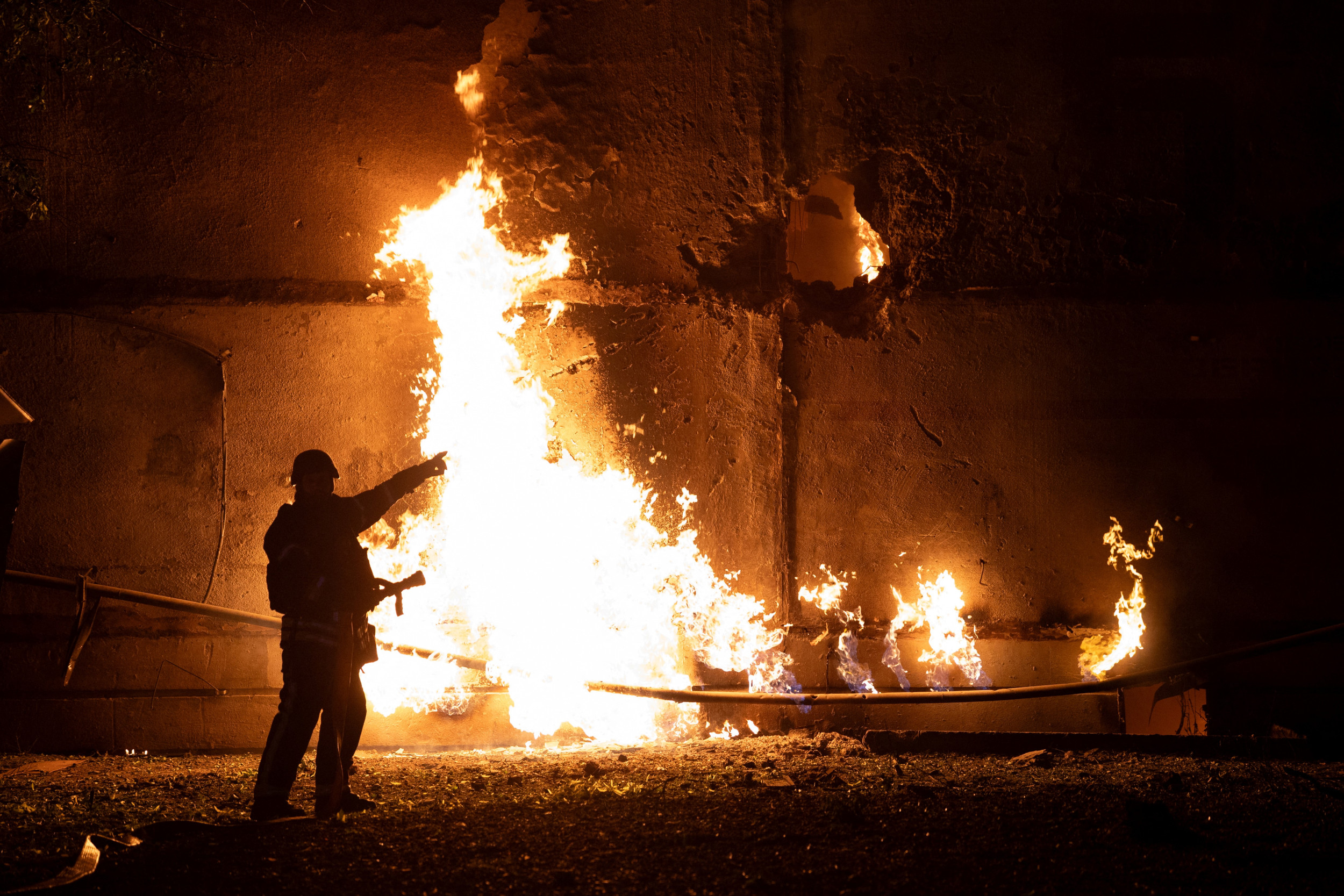
<div class="article-body article-real-content v_text"><p>Russia conducted its second-largest missile and drone attack on Ukraine since the start of its invasion in 2022, according to the Institute for the Study of War (<a class="multivariate" href="https://www.newsweek.com/topic/isw">ISW</a>) whose graph illustrate the response to Kyiv's drone barrage on <a class="multivariate" href="https://www.newsweek.com/topic/russian-military">Russian military</a> airfields.</p><p>The Washington, DC think tank's figures <a class="multivariate" href="https://www.understandingwar.org/backgrounder/russian-offensive-campaign-assessment-june-6-2025" rel="noopener nofollow" target="_blank">showed</a> how Russia's drone assault overnight Thursday on Ukraine had only been surpassed on May 31. There had been anticipation over how Moscow would respond to Kyiv's Operation Spiderweb, which was dubbed by pro-Kremlin bloggers as "Russia's Pearl Harbor."</p><p>The figures did not include Friday's overnight strikes on Kharkiv. Mykhailo Fedorov, Ukraine's deputy prime minister for innovation, education, science and technology, told <em>Newsweek</em> about plans to scale up an AI-controlled air defense turret to down Russian projectiles.</p><p><em>Newsweek</em> has contacted the Russian Defense Ministry for comment.</p><h2>Why It Matters</h2><p>Kyiv braced for a Russian response to Operation Spiderweb, and Russia responded by firing missiles and drones over all of Ukraine Thursday.</p><p>The ISW figures could signal further Russian drone barrages, which, if they drag out peace negotiations, could see the U.S. impose a new set of tough sanctions.</p><h2>What To Know</h2><p>Ukraine's Air Force reported on Friday that, the previous night, Russian forces launched 452 projectiles, including 407 Shahed and mock drones, across the country; Kyiv said these injured at least 49 people and killed three.</p><p>Russia also launched six Iskander-M/KN-23 ballistic missiles and 36 Kh-101 cruise missiles, as well as two Iskander-M cruise missiles and one Kh-31P anti-radar missile.</p><p>While air defenses thwarted most missiles and drones, Russian strikes hit 19 locations across Ukraine, including high-rise buildings, and energy infrastructure in the cities of Kyiv, Lviv, Ternopil, Chernihiv, and Kremenchuk.</p><p>The ISW graph showed nearly a fivefold increase in the size of Russia's drone and missile attack on Thursday compared with the previous day. It also highlighted how the only bigger barrage was on May 31 when 479 projectiles were launched.</p><p>Ukraine is continuing to innovate and expand its air-defense umbrella to counter the growing threat posed by Russian missiles and drones.</p><h2>Ukraine's Sky Sentinel AI-Powered Air Defense</h2><p>Mykhailo Fedorov, Ukraine's deputy prime minister for innovation and military personnel, told <em>Newsweek</em> that Russian Shahed drones have significantly evolved; they are equipped with more-powerful engines and complex communication systems, flying at higher speeds and lower altitudes.</p><p>This makes them harder to jam and intercept with older air-defense methods, which is why Ukraine is try to innovate to neutralize these upgraded threats.</p><p>Fedorov said Ukrainian engineers have developed an AI-controlled air defense turret called Sky Sentinel; this can down Shahed-136 drones, smaller UAVs, and even cruise missiles.</p><p>Once synced with radar and deployed, the AI locks onto targets, calculates their speed and trajectory, and fires. Its precision and automation features means it needs only half as many units to defend cities as compared with the number of mobile groups currently involved, Fedorov added.</p><p>UNITED24, a Ukrainian government-run platform that funded the prototypes of the <a class="multivariate" href="https://www.newsweek.com/russia-black-sea-fleet-magura-v5-naval-drones-crimea-1906280" rel="noopener" target="_blank">Magura naval drones</a> that dealt a blow to Russia's Black Sea Fleet, is launching a $1.5 million fundraiser to produce the first 10 turrets. These can protect large areas at lower cost freeing up high-precision missiles for more critical targets.</p><h2>What People Are Saying</h2><p><strong>Ukrainian President Volodymyr Zelensky said on X:</strong> "Over 400 drones and more than 40 missiles—including ballistic missiles—were used in today's attack."</p><p>He added: "Russia must be held accountable for this."</p><p><strong>U.S. President Donald Trump said that Operation Spiderweb</strong> gave Putin "a reason to go in and bomb the hell out of them."</p><p><strong>Mykhailo Fedorov, Ukraine's deputy prime minister, told <em>Newsweek</em>:</strong> "Russian Shahed drones have significantly evolved. They're now equipped with more powerful engines and complex communication systems, flying at higher speeds and lower altitudes.</p><p>"That's why we're constantly looking for innovative solutions that can effectively neutralize these upgraded threats before they reach cities or critical infrastructure."</p><h2>What Happens Next</h2><p>Thursday's strikes by Russia were followed up with a bombardment of Kharkiv. However, pro-Russian military bloggers say that, so far, Moscow's response was not proportional to the damage caused by Operation Spiderweb, which they compared with Japan's Pearl Harbor attacks of 1941.</p><p>However, Russia's next move in continuing drone strikes could be tempered by bipartisan U.S. legislation that seeks to impose tough sanctions if Moscow drags out peace negotiations.</p> </div>
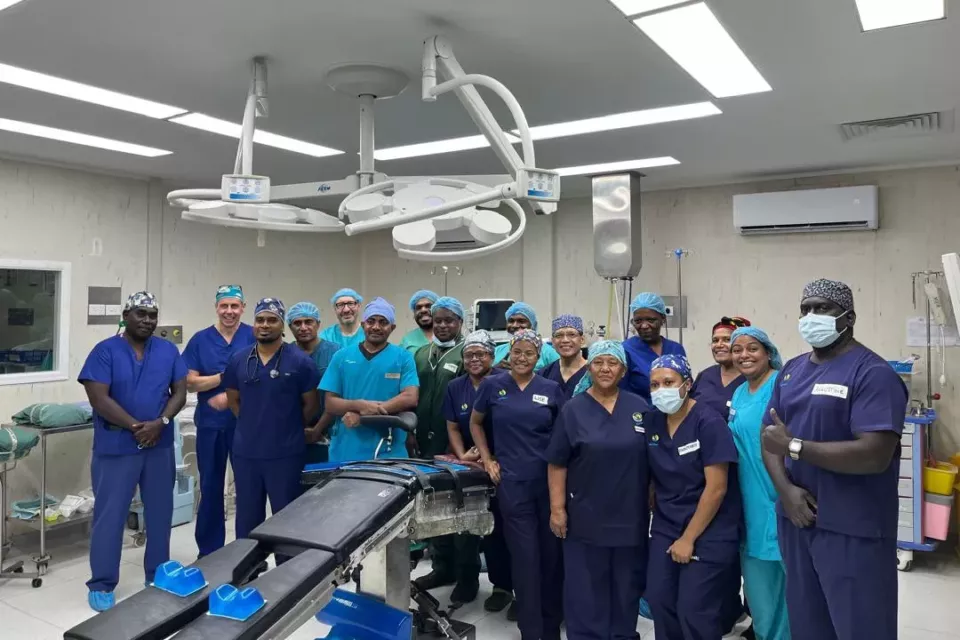
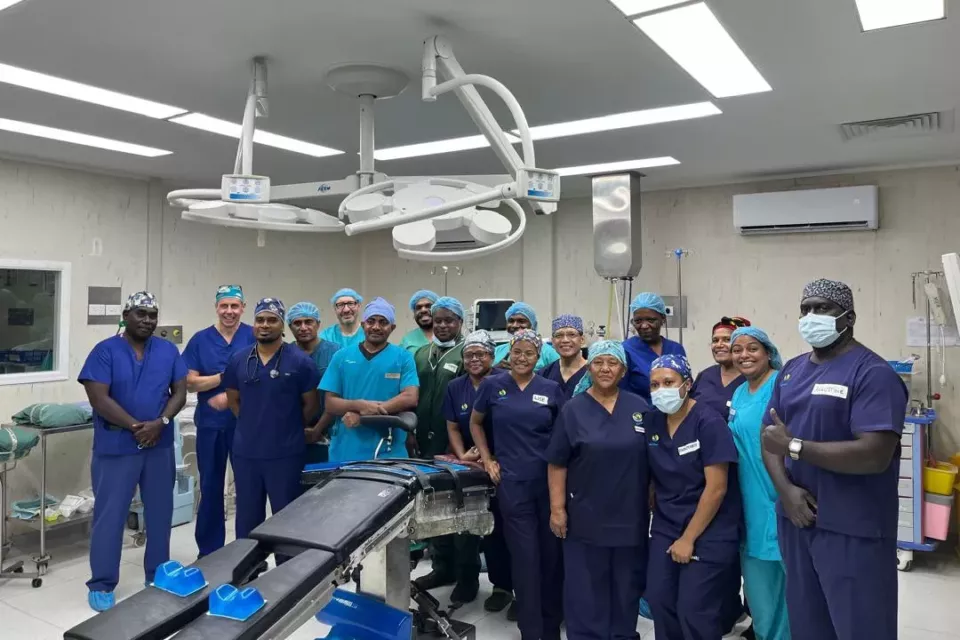
Papua New Guinea's health sector has received its largest ever single-year budget allocation, with the 2026 National Budget committing K3.2 billion — a 15% increase over the 2025 allocation of K2.8 billion. Treasurer Ian Ling-Stuckey announced the allocation as part of a K30.9 billion national budget. The health budget increase reflects Prime Minister James Marape's stated commitment to making meaningful improvements in healthcare access and quality for ordinary Papua New Guineans. Medical supplies funding has grown from K240 million to K267 million. Among the specific priorities funded are the expansion of maternal and child health services in rural provinces, the procurement of new diagnostic equipment for regional hospitals, and investment in the cold chain infrastructure needed to maintain the immunization programme. The budget also includes provision for the ongoing upgrade and rehabilitation of health facilities, with several district hospitals in remote provinces receiving funding for structural repairs, generator replacements, and water supply upgrades. Health advocates welcomed the increase but called for equally strong attention to implementation and accountability. The National Health Authority committed to publishing quarterly expenditure reports.
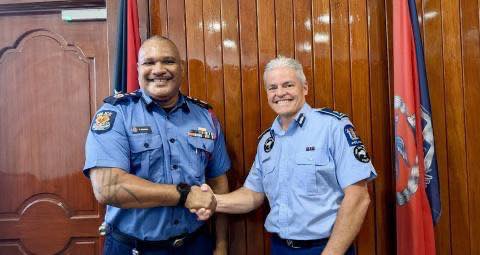
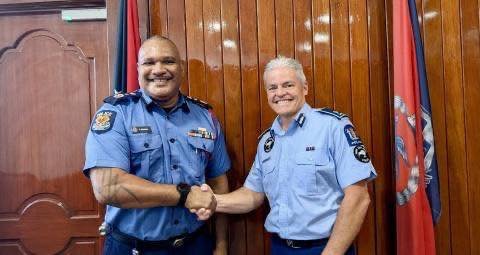
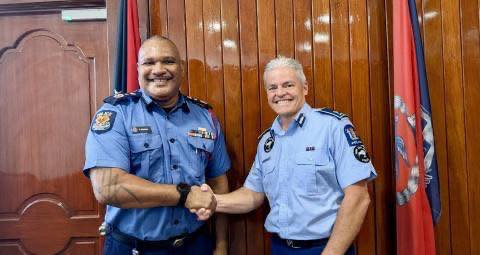
New Zealand Police Commissioner Richard Chambers completed a working visit to Papua New Guinea, meeting with his PNG counterparts at the Royal Papua New Guinea Constabulary (RPNGC) to discuss strengthening bilateral policing cooperation and sharing expertise in community-based policing and youth crime prevention. During his meetings in Port Moresby, Commissioner Chambers met with RPNGC Commissioner David Manning to review current areas of cooperation. Key topics included investigative training support, forensic capacity development, digital policing capabilities, and approaches to family and sexual violence. New Zealand has a long history of policing support in the Pacific, providing training attachments, equipment donations, and technical advisory assistance to police forces across the region. Commissioner Chambers also visited the PNG Police College in Bomana, where he observed training activities and met with student officers. He pledged to explore options for New Zealand-funded training scholarships for PNG officers. Both commissioners confirmed that a formal memorandum of understanding on policing cooperation — currently under development — would be finalized and signed later in 2026.
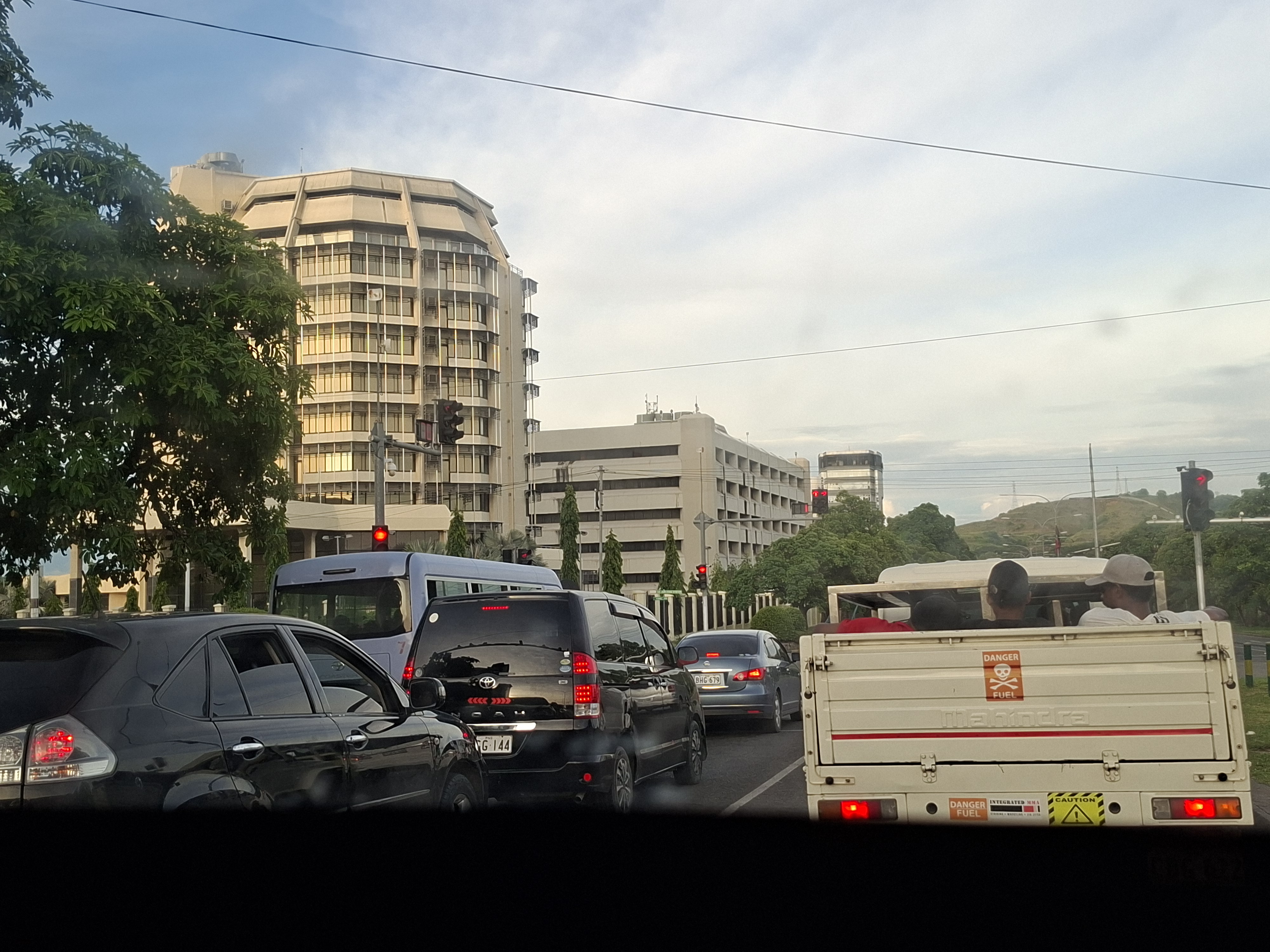
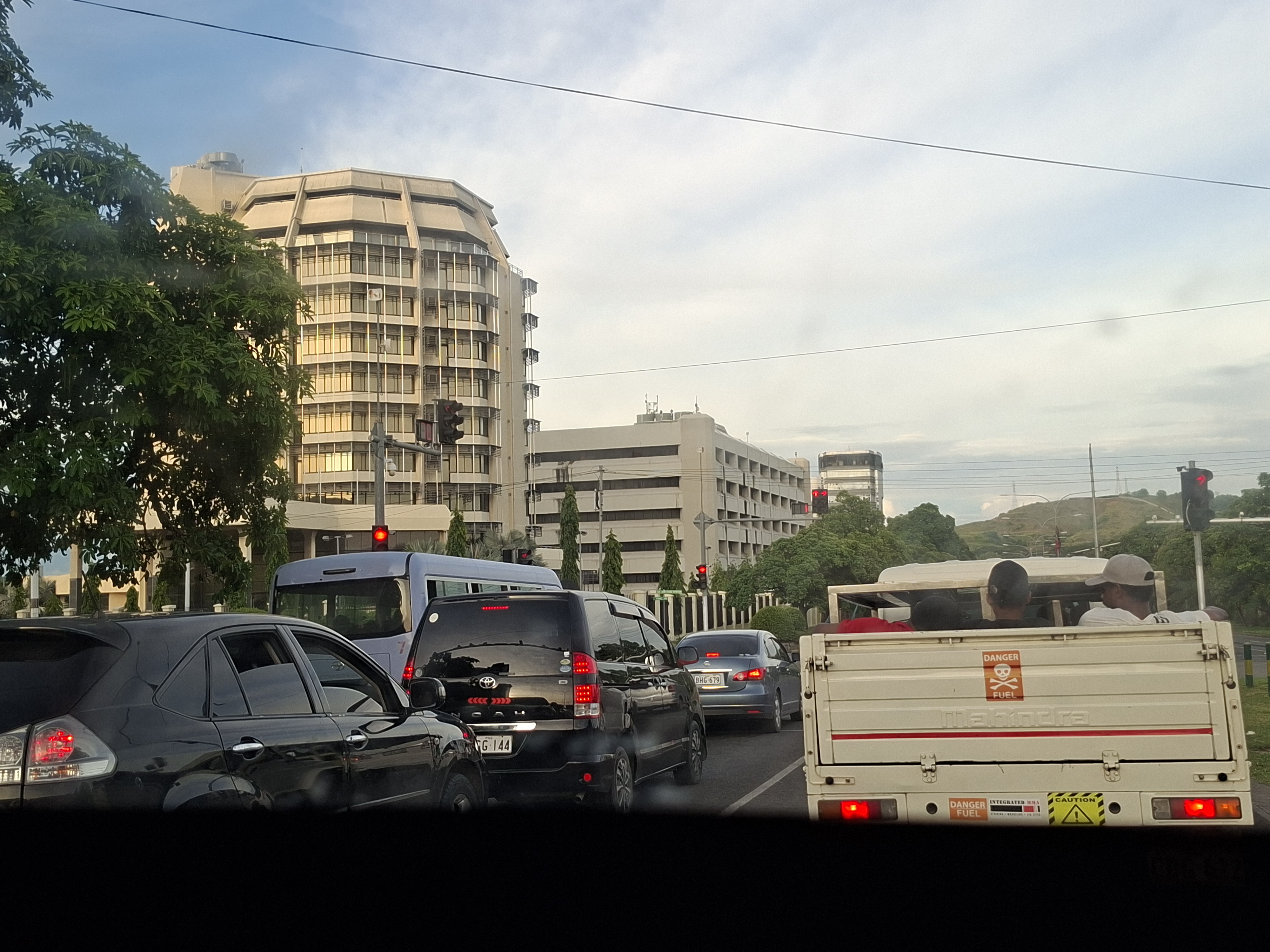
Motorists and transport operators across Papua New Guinea have welcomed a reduction in fuel prices at stations nationwide following a determination by the Independent Consumer and Competition Commission (ICCC). The price reduction applies to petrol, diesel, and kerosene. The ICCC sets fuel prices in Papua New Guinea on a monthly basis using a formula that accounts for international crude oil prices, shipping costs, exchange rate movements, and in-country distribution costs. The May 2026 determination reflects moderating global oil prices and a slight strengthening of the PNG kina. The price reduction is expected to provide relief across a broad range of economic activities. Lower fuel costs benefit public transport operators, commercial trucking companies, fishing fleets, and households relying on generators for power. The ICCC noted that fuel prices in Papua New Guinea remain structurally higher than in many neighboring Pacific Island nations due to the country's challenging logistics — rugged terrain, limited road networks, and the need to supply hundreds of remote communities. The commission pledged to continue monitoring international energy markets and passing on savings to consumers whenever market conditions permit.
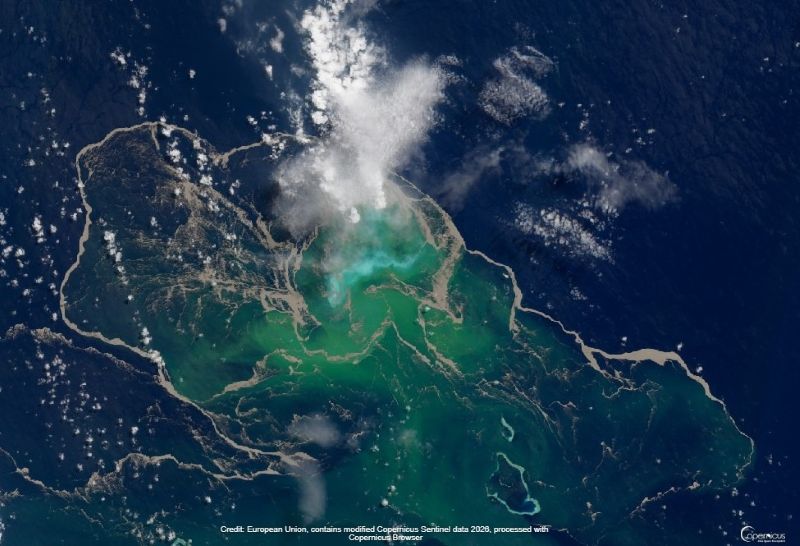
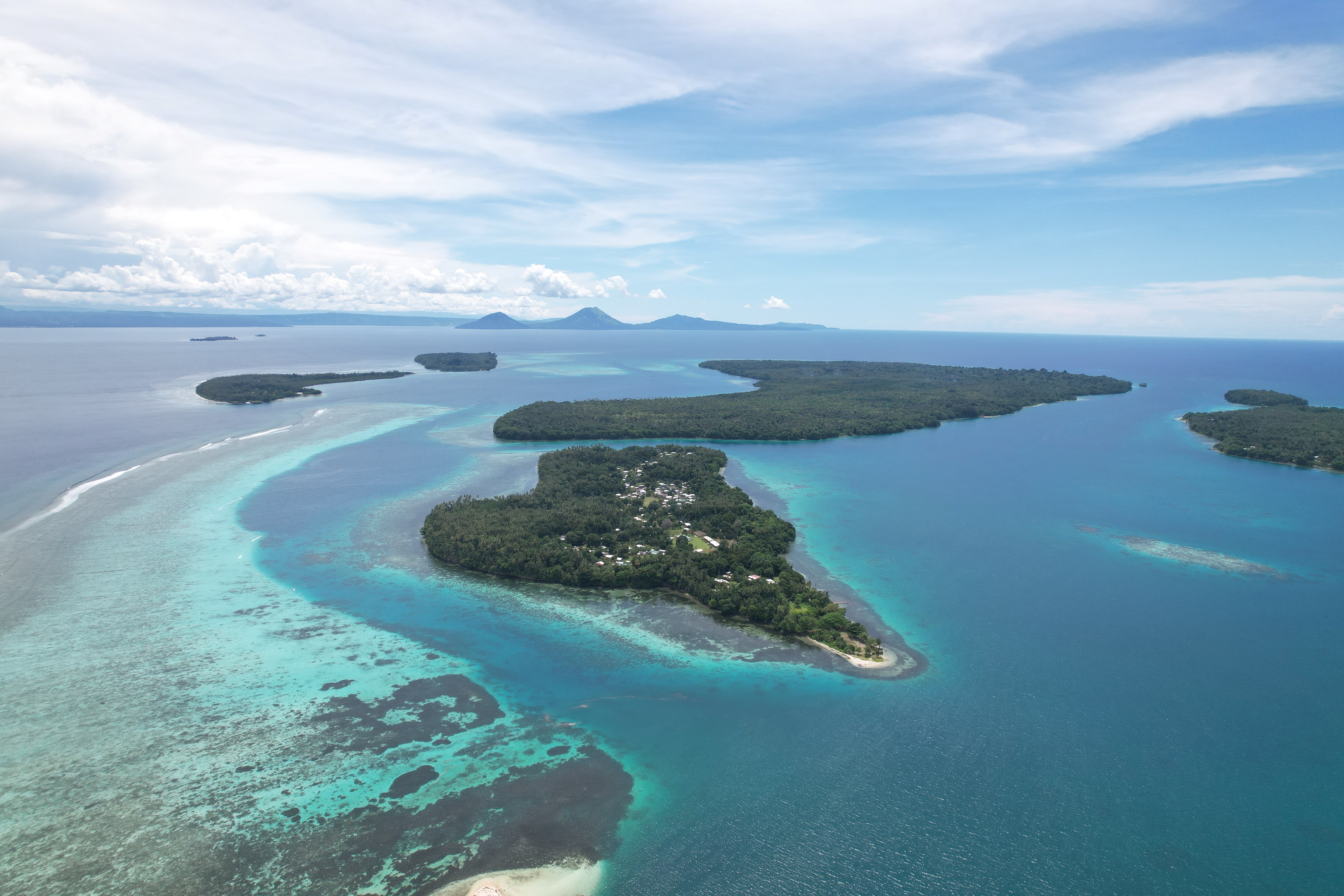
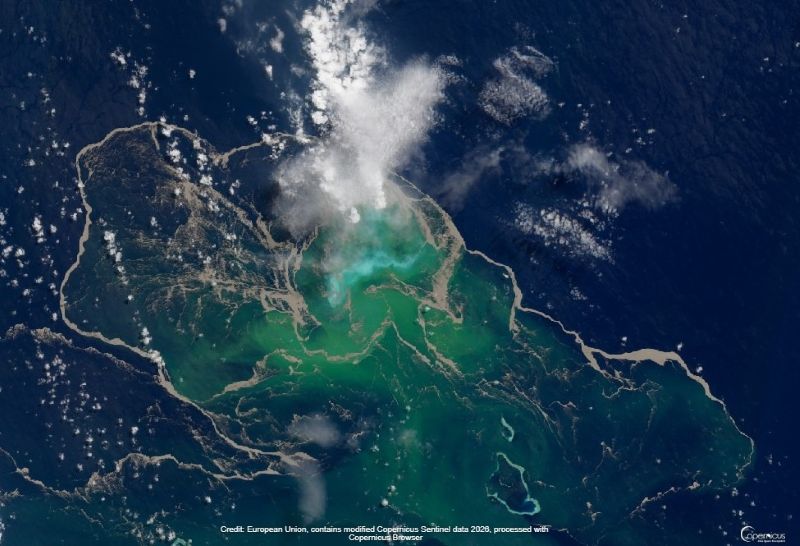
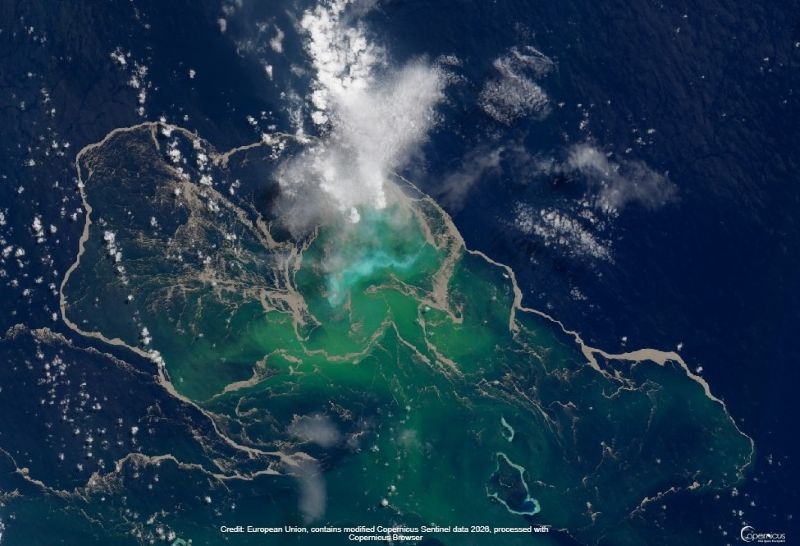
An underwater volcano has been erupting in the Bismarck Sea off the northern coast of Papua New Guinea since May 8, sending dramatic white steam plumes up to 3,000 meters into the atmosphere and creating expansive rafts of floating pumice drifting across the surrounding Pacific waters. Scientists are closely monitoring the event, which could potentially result in the birth of a new volcanic island. The eruption began when seismometers first detected a swarm of small earthquakes beneath the Titan Ridge, a volcanic feature in the southwestern Pacific. Within days, NASA's Aqua and Terra satellites captured striking imagery of the volcanic plumes and tan-colored pumice rafts. Scientists from multiple international institutions noted that the current eruption site is approximately 16 kilometers from a 1972 underwater eruption in the same region, suggesting the Titan Ridge is a zone of sustained geological activity. Papua New Guinea sits on the Pacific Ring of Fire, one of the most seismically and volcanically active regions on Earth. Scientists say they are unable to predict how long the current eruption will last or whether it will ultimately produce a permanent new landmass. The event has drawn significant international attention and is being monitored around the clock by regional geological agencies, with drone flyovers and ship-based observations planned to gather more detailed data.
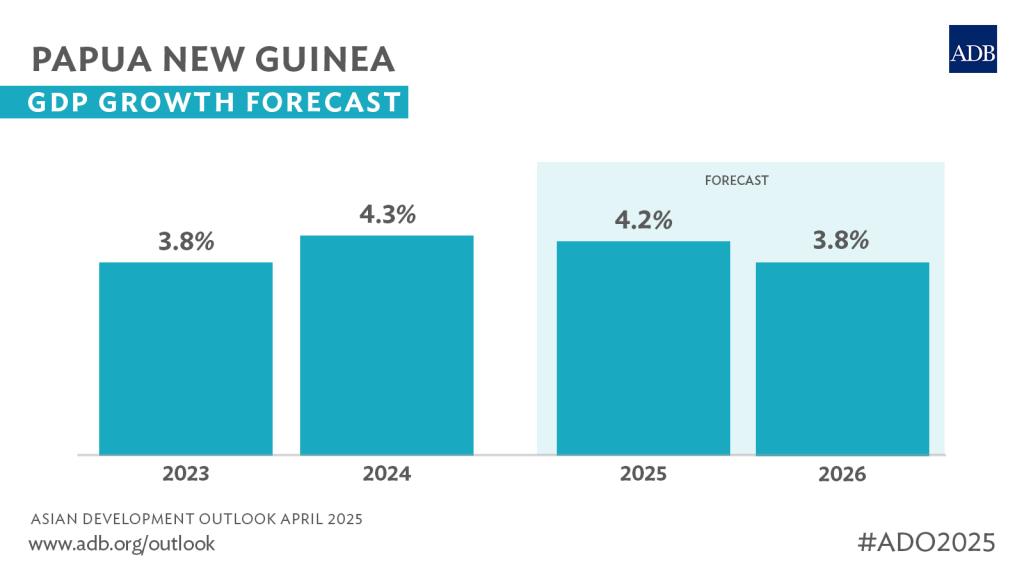
Papua New Guinea's economy is forecast to grow by 3.8% in 2026, according to the Asian Development Bank's Asian Development Outlook, with growth driven by both the resource sector — including the resumed operation of the Porgera Gold Mine — and a recovering non-resource economy supported by rising domestic consumption. The Porgera Gold Mine in Enga Province, which resumed production in late 2024 following a protracted period of closure and ownership restructuring, is expected to be a significant contributor to PNG's resource sector growth. The mine is one of the largest gold producers in the Asia-Pacific region. ADB Country Director for PNG Said Zaidansyah highlighted the government's progress on macroeconomic reforms, including domestic revenue mobilization and fiscal deficit reduction. He also flagged challenges including power blackouts that disrupt business activity. Inflation is forecast to rise to around 4.3% in 2026, driven by food price pressures. The ADB recommended the government maintain prudent fiscal policy while increasing investment in human capital and infrastructure. Per capita GDP growth remains modest at under 1% annually, reflecting the challenge of translating aggregate economic growth into improvements in living standards for PNG's rapidly growing population.

Port Moresby is hosting the 2026 edition of the Kokoda Cup boxing challenge, featuring an exciting new dimension — international bouts providing PNG's cadet and youth boxers with their first opportunity to compete against foreign opponents on home soil. Packed venues and enthusiastic crowds have turned out to support the country's emerging young fighters. The Kokoda Cup has been a cornerstone of PNG boxing development since its inception, providing a structured competitive pathway for young boxers from communities across the country. Many of PNG's most successful international boxers got their start competing in the Kokoda Cup circuit. This year's international element sees visiting teams from Australia and the Solomon Islands providing challenging competition for PNG's top cadet and youth boxers, testing them against different fighting styles in preparation for future international competition. The event also serves an important community development function, with the PNG Boxing Union using the occasion to conduct coaching education workshops, referee certification programmes, and anti-doping awareness sessions. Boxing authorities expressed hope that the success of the international component in 2026 would pave the way for Port Moresby to host larger multi-nation boxing tournaments in future years.
AD
728×90
TAC
Space for advertising banner